
Post Mortem
You know why Bezos did it, don’t you?
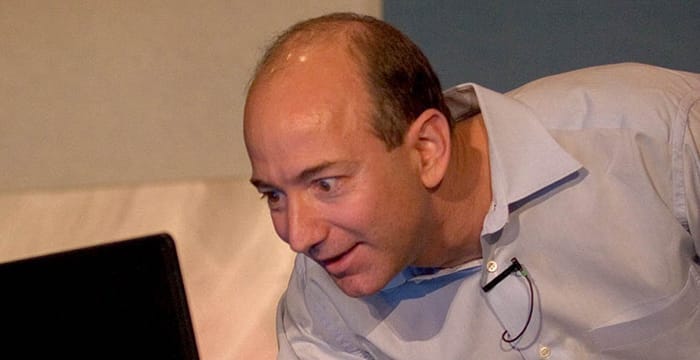
As you may have seen, Jeff Bezos cut the shit out of the Washington Post on Wednesday. Hundreds of reporters were let go. Lots of hard news coverage gone, especially on the international desk. (Subscribe to Foreign Exchanges!)
The sports section is kaput but “several reporters will now cover sports as a ‘cultural and societal phenomenon,’” reports Ruth Marcus in her very good account at the New Yorker. That means “Whither Pickleball,” I guess, and such like. Speaking of culture, no more books section either, and I hear Bezos fired a bunch of critics. We always knew conservatives hated the arts, and that when they talked about “culture war” they meant a war on culture. Now that Bezos is helping Trump blow up the supply lines.
As reported by Politico, the Post management tried to portray this as financial necessity:
“We have grappled with financial challenges for some time. They have affected us in multiple rounds of cost cuts and buyouts, along with periodic constraints on other kinds of spending,” The Post’s Executive Editor Matt Murray said in a newsroom note seen by POLITICO, stating that the reductions would impact “nearly all news departments.”...
I don’t believe that. Do you? Marcus — who yet insists she is “not a Bezos hater” — seems puzzled that a man of such great wealth would, after showing such serious interest in the news business — he had, after all, talked about “a new golden era for the Washington Post” when he took it over — cut the heart out of his own paper:
Why not one per cent of [his wealth] for the Post, enough to sustain the paper indefinitely? A pipe dream, I know, but this arrangement would make Bezos the savior of the Post, not the man who presided over its demise.
Marcus, a longtime veteran of the Post who resigned last year, is very sentimental about journalism and about her old paper, as you can see by this anecdote she seems compelled to throw in:
[Former editor Robert] Kaiser recalled arriving at the paper’s London bureau in 1964. “If I say, ‘I’m Kaiser from the Washington Post’—what’s that? They never heard of it.” A decade later, he was posted in Moscow, as Woodward and Carl Bernstein were breaking the Watergate story. “Explaining was not necessary,” Kaiser said. “The Russians, in fact, had a gloriously exaggerated impression of the Washington Post as the king-maker and the king-destroyer.”
Both the “what’s that” and the “king-maker and king-destroyer” ideas of newspapering are long gone. When I came to the Village Voice in 2008 it had not only lost its old role as a social, cultural, and political force, it was firing the big writers who’d made it so and throwing their pay packages in the boiler just to keep the engine going. By that time the paper was doing — well, what I had been doing before I came to it, and still do, far outside the classic “journalism” paradigm: Casting our voices into the dry air of the Internet and hoping to be heard.
Journalism — and a lot of other necessary but undervalued parts of our democracy — was then being ground down by capitalism gone feral, enabled by bought-off politicians, growing ever more predatory and destructive (or, if you like, “creatively destructive”) and treating all financially underperforming entities the way a lawnmower treats dandelions. That machine has only gotten better at its job and is now masticating even those parts of democracy that were once not so undervalued.
As for Bezos, I think his motive is obvious. He bought the Post in 2013 as a political asset — a valuable bulwark as the growth of his business made him a potential target of government interference. Maybe he thought the leftists who increasingly agitated for higher taxes on the rich would get power and come after him. Maybe he thought the first Trump term, which generated instant and massive resistance, made that more likely when the inevitable backlash came — hence the “Democracy dies in darkness” shtick he affected in 2017.
But when it became apparent Trump was coming back to power in 2024, Bezos saw the threat elsewhere. That’s why he prevented the paper from endorsing Kamala Harris — and felt it worth the 250,000 subscribers he lost by doing it. Because despite what his factota claim, the financial health of the paper was never an issue for him.
And when Bezos saw how viciously Trump was coming after everything and everybody that had annoyed him and his rightwing buddies for decades — colleges, leftish law firms, black people, mouthy women, and especially the news outlets that had harried conservatives since the days of Nixon — outlets like CBS News and the Post — he found it best to show fealty the only way Trump would accept: by performing a controlled demolition on his own paper.
That’s what he’s been doing, and what he did this week. Only a blind person could miss it.
He probably needed the salaries he cut to reimburse himself for all the cash he put into the Melania movie. You know that film will never earn back the money at the box office.
Seriously, though, I agree with every word of this, Roy. Bezos could float the paper AND cure world hunger without feeling so much as a pinch. This is a strategic, self-protective move.
Eat the rich.
Journalism is a boat you get on, knowing it will sink. I lived through three mergers and layoffs before I gave up and went into sales. But blogging got its hooks into me and I settled for writing for peanuts -- more like peanut shells.
The Village Voice had some of the best investigative journalism ever. I still miss it.